
What is ultimate frisbee?
Ultimate frisbee is a team sport where the aim is to score by catching the frisbee in the opponent's end zone. Two teams play against each other, and you may neither tackle nor run with the frisbee. So the frisbee must be passed between teammates until a score is made. There will always be one team on offence and one team on defence. If the disc hits the ground, goes out of bounds or the opponent gets hold of it, the offence passes to the team that was just on defence.
Many know ultimate from a PE lesson in primary or secondary school, but few know that it's also a sport you can take up. All over the world ultimate is played at both casual and elite level in organised clubs. That's also true in Denmark.
Ultimate frisbee is commonly just called ultimate, and the frisbee is often just called a disc. In this way the sport differs from most other sports, which usually use a ball. Ultimate is a non-contact sport that everyone can join. It takes very little to get started, since you only need a frisbee and 8 objects to mark the field's four corners, plus an end zone at each end of the field.
The rules of ultimate frisbee
You play on a field with an end zone at each end, as known from American football or rugby. Unlike those two sports, ultimate is a non-contact sport. You score a point by catching the disc in the opponent's end zone. During play, the player in possession of the disc may not run with it. So you have to stay put where you received the disc. The aim is therefore to pass the disc to your teammates in order to score a point. Not being allowed to run with the disc also helps make ultimate quite unique. It means you can't, as in other sports, get by with a single superstar on the team who can dribble past all the opponents and score.

During each point there will always be one team on defence and one team on offence. The team on offence is the team in possession of the disc. If the attacking team loses the disc, the disc, and thus the offence, passes to the other team. A disc is lost if the other team catches it while it's in the air, if the disc is dropped on the ground, or if it goes out of bounds. The same applies if an opponent blocks the disc by knocking it to the ground or out of bounds.
Open, women's and mixed
Ultimate differs in several ways from many other team sports, as it's played without a referee and can be played mixed, so that men and women play together. Other sports also compete in mixed divisions, but there the teams are usually separated by a net and so don't mix with each other on the field. That's what you do when playing mixed in ultimate.

For matches and tournaments there are usually three divisions: open, women's and mixed. In practice the open division is a men's-only division, but everyone may enter and play. The mixed division is usually played with a fixed gender ratio, so that each team has the same number of men and women on the field. The women's division is for women only.
Different types of ultimate frisbee
Ultimate is the most popular team sport within disc sport and is played all over the world. Different countries have national teams, and they compete against each other at European and World Championships. Originally ultimate is played outdoors on grass, but it can also be played indoors or on the beach. In all cases the layout of the field is the same, but for both indoor and beach the field is smaller than on grass.
-
Outdoor ultimate on grass
Outdoor ultimate is played on a field 100 metres long and 36 metres wide. The end zone at each end is 18 metres deep. So it's a very large field. In matches you play 7 v 7, and a match lasts between 75 and 90 minutes depending on the tournament. -
Outdoor ultimate on the beach
On the beach you play 5 v 5 on a smaller field, and the matches are usually shorter than on grass too. There are many beach tournaments, especially in southern Europe, which are very popular among Danish ultimate players. -
Indoor ultimate
Indoor ultimate is played on a handball court, with an end zone 6 metres deep at each end. Indoor ultimate matches are played 5 v 5 and are typically only 25 minutes long. Indoor ultimate is very fast, and since there's no wind to affect the disc, you often see many high throws where the disc lies almost vertical in the air.
How do I get started with ultimate frisbee?
It's easy to get started playing ultimate frisbee. Many try the sport for the first time in a PE lesson in either primary or secondary school. Ultimate frisbee is a team sport, so many typically start by playing with friends in a park, but it's also possible to go straight to a practice at one of the ultimate frisbee clubs in Denmark.
If ultimate has already caught your interest, or if you just want to try something new, you can start playing ultimate at your local club. The ultimate clubs typically have practice 1-3 times a week and play matches against the other clubs in the national league. So it's just like taking up another team sport such as football or handball. The Danish ultimate clubs are organised under the Danish Frisbee Sport Union, and you can find an updated list of the Danish clubs on their website. In 2022 there are at least 15 active ultimate clubs and more than 650 players in Denmark.
The Danish clubs are very open and there's always room for new players. If you play outdoors it's an advantage to wear football boots, but it's not a requirement if you just want to try a practice or two. You can also find the Danish clubs on social media, and you'll always be welcomed to their practice. All you need is sportswear and a water bottle, as you'll probably get thirsty along the way.
A sport without a referee - Spirit of the Game
Ultimate is played without a referee, and although it sounds incredible if you're used to watching or playing team sport, this system works even at the highest level in ultimate. Instead of having a third party act as referee on the field, the players themselves officiate the match while they play. This of course requires all players on the field to be committed to playing fair. Among ultimate players this attitude is called Spirit of the Game.
In practice it works like this: the players on the field must themselves call "foul" if a rule is broken, or if the disc is out of bounds, for example. There is of course a well-defined set of rules that play follows. The rules are maintained by the World Flying Disc Federation (WFDF), and you can always find the current rules on their website. If you visit the page, you can see that Spirit of the Game is the first section in the rulebook for ultimate. Among other things, it states that all players must know the rules, be fair-minded and objective, and be honest when they play.
After a match, all players from the two teams meet in a spirit circle, where each team's captain thanks the other for the game. At many tournaments each team gives its opponent a spirit score. You give the opponent a score from 1-5 in five different categories:
- Knowledge and use of the rules
- Fouls and body contact
- Fair-mindedness
- Positive attitude and self-control
- Communication
The score is filled in on a spirit scorecard, an example of which can be seen below. At the end of the tournament, both a tournament winner and a spirit winner are crowned. The spirit winner is the team with the highest average spirit score across all their matches.

So Spirit of the Game is the backbone of ultimate, and if after this description you still find it hard to believe it works, we'd recommend everyone to try it.
Tournaments in ultimate frisbee
Ultimate tournaments come in many forms, and many both elite and casual tournaments are held both in Denmark and across Europe. In Denmark, a national championship is held where Danish ultimate clubs play against each other over the season, both outdoors and indoors. To enter the national championship, a club must be a member of the Danish Frisbee Sport Union.
All over Europe you'll find many different tournaments where men's, women's and mixed teams can all freely enter. In the ultimate community it's very popular to travel to tournaments outside Denmark, and who wouldn't like to spend a weekend on a beach in southern Europe with sun and disc sport?
Many tournament organisers use the website Ultimate Central to tell people about their tournament. On their site you can find tournaments all over the world. If you don't have a whole team to enter in a tournament, you can also become a "pick-up player" with already-entered teams that are short a player or two. That way you get to play with a team you don't necessarily know. The best way to become a pick-up player is to find a tournament's Facebook page or event and write to the organisers there that you're interested.
A story from an ultimate player
"I started playing ultimate in 2009 while I was in secondary school, after trying it in a PE lesson. There was a local club close to the school, and I showed up to their practice with a couple of friends. We all got quite hooked on the sport, and the club welcomed us really well. Since then I've played ultimate a couple of times a week.
I'd recommend everyone who likes sport to try ultimate. It's a really good way to meet new friends, and most of my social circle today comes from there. In ultimate there are many opportunities to play at both casual and elite level. Many clubs travel to weekend tournaments abroad, and although it may sound as if you have to have played for a very long time to go along, that's not the case. Over the past 10 years I've played tournaments all over Europe, both elite ultimate in the Netherlands and Switzerland and casual tournaments on the beach in Portugal or Spain. "
- Philip
The history of ultimate frisbee
Ultimate frisbee was invented in the USA and was first played in the late 1960s at American colleges. The name frisbee comes from pie tins made of tin by the brand "Frisbie's Pies". The American students had discovered that if you turned the pie tin upside down, you could throw it to each other.
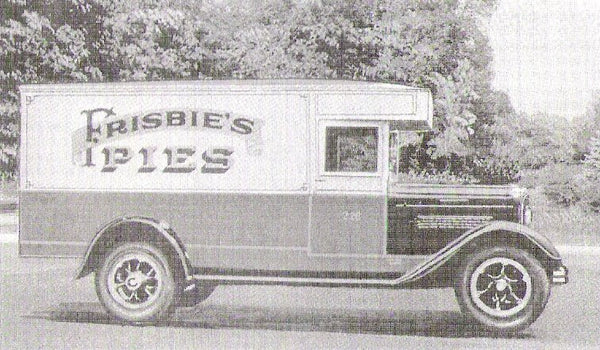
The name "Frisbie's" became "Frisbee" to avoid trademark infringement when the company Wham-O began producing the first plastic frisbees. The term Frisbee is therefore still a Wham-O registered trademark today for a particular plastic disc. Today plastic discs are still used to play ultimate frisbee, and despite the sport's name, where frisbee has stuck, today it's played with somewhat different discs than the original frisbee. So the discs played with today are technically not a frisbee. Many ultimate players use the term disc instead of frisbee for the discs they play with.
Since then the sport has developed a great deal, and today it's played at a high level worldwide, with national teams competing at both European and global level.
In Denmark the sport arrived during the 1970s, and the Danish Frisbee Federation was founded in 1978. Several of the founders are still active in disc sport and today play mainly disc golf, which is why you can often meet them on the Danish disc golf courses.
Read more about disc sport
Disc sport has many aspects, and besides ultimate frisbee, disc golf has also become very popular in recent years. You can find more inspiration in our articles:
-
Disc golf in Denmark
Are you curious about how disc golf has developed in Denmark over the past few years? Then you can read on in our article "Disc Golf in Denmark" and find the latest figures on the number of disc golf courses, the number of rounds played and the number of disc golf players. -
What is disc golf?
In our article about disc golf you get an introduction to the sport, the rules of the sport and much more. You can read more about what disc golf is in our article. -
A guide to disc golf discs and flight numbers
On disc golf discs there are usually 4 numbers, which say something about how the disc is designed to fly. These 4 numbers are the disc's flight numbers, and you can read more about them in our guide to flight numbers.